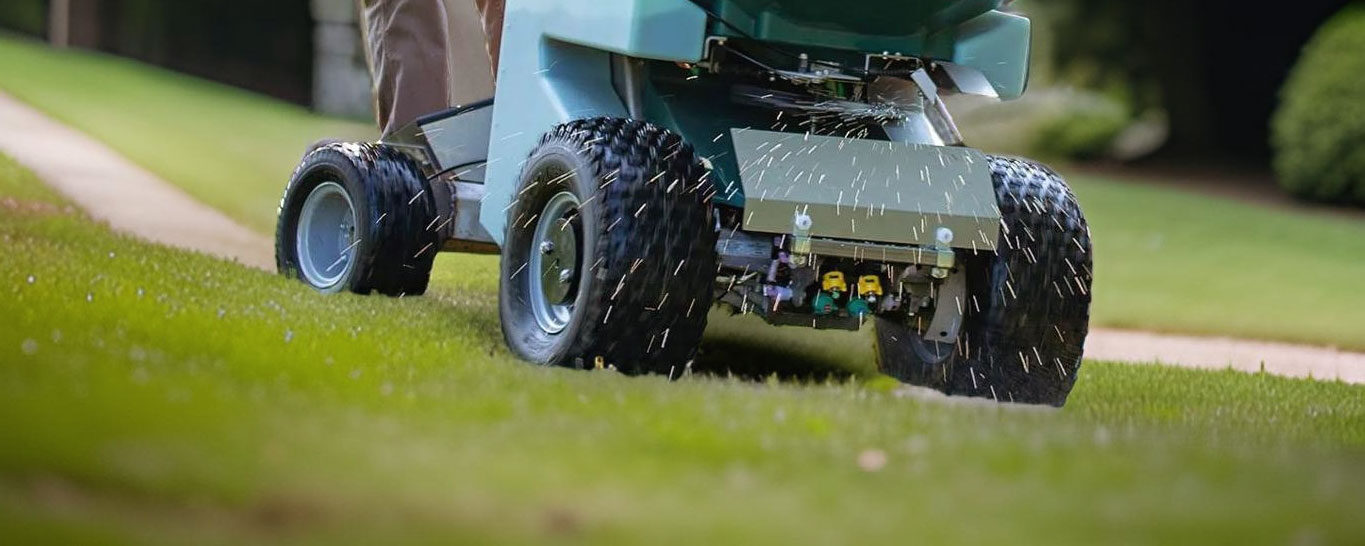
Weeds keep coming back because pulling or spraying them once does not address the conditions that allow new weeds to grow. Bare soil, thin turf, compacted ground, poor soil conditions, and missed pre-emergent timing can all contribute to the cycle.
If your lawn seems to be a revolving door for dandelions, crabgrass, and other weeds, the problem is not bad luck. New weeds are continually taking advantage of openings in your lawn.
The good news is that you can break this cycle. The key is to combine properly timed weed control with a thicker, healthier lawn and the right soil and insect treatments.
In this guide, we’ll explain why weeds keep coming back, what you can do to stop the cycle, and how a professional seasonal lawn care program can help.
Quick Answer: Why Do Weeds Keep Coming Back?
Weeds keep returning when your lawn has conditions that give weed seeds an opportunity to germinate and grow. Common causes include:
- Thin or bare areas of grass
- Compacted or poor-quality soil
- Low soil pH
- Drought or shade stress
- Missed pre-emergent treatment windows
- Existing weed seeds in the soil
- Grub damage that weakens or kills turf
- Treating visible weeds without addressing the underlying lawn conditions
The most effective long-term approach combines pre-emergent weed control, post-emergent treatments, healthy turf growth, soil improvement, and properly timed seasonal applications.

Why Weeds Keep Coming Back
Your Lawn Has Thin or Bare Spots
A thick, healthy lawn is one of your best defenses against weeds.
Dense grass leaves less room for weed seeds to germinate and grow. When your lawn becomes thin or develops bare areas, sunlight reaches the soil and creates opportunities for weeds to take over.
Several issues can cause turf to thin, including:
Grub damage: White grubs feed on grass roots from below the soil. Significant damage can leave large brown areas that eventually become easy places for weeds to establish. TLC offers Grub Proofing as an optional lawn care service to help protect your lawn before this type of damage occurs.
Compacted soil: Compacted soil makes it harder for grass roots to grow deeply. Shallow or restricted roots can contribute to thinner turf, leaving more space for weeds.
Low soil pH: Grass needs the right soil pH to absorb nutrients effectively. When soil becomes too acidic, your fertilizer may not produce the results you expect because the grass cannot make full use of available nutrients.
Shade and drought stress: Grass that is stressed by excessive shade or insufficient moisture can thin out, while many weeds are better equipped to survive stressful conditions.
Weed Seeds Are Everywhere
Even when you remove every visible weed from your lawn, you have not necessarily removed the seeds waiting underneath the surface.
A single dandelion can produce up to 15,000 seeds, while crabgrass can produce around 150,000 seeds per plant during a season, according to Penn State Extension.
These seeds do not necessarily germinate all at once. Some remain dormant in the soil until conditions are right.
Rain, wind, birds, foot traffic, and other factors can also introduce additional weed seeds to your lawn.
This is why removing the weeds you see is only part of the solution.
You Missed the Pre-Emergent Window
Pre-emergent weed control is designed to prevent certain weed seeds from germinating. It works by creating a barrier in the soil that interferes with developing roots and shoots.
The important point is that pre-emergent does not kill established weeds. It needs to be applied before the target weed germinates.
Timing is especially important for crabgrass.
Crabgrass typically begins germinating when soil temperatures reach approximately 55 degrees Fahrenheit at a two-inch depth. Forsythia bloom is traditionally used as an indicator of the approximate timing.
Applying pre-emergent too late can mean missing the most important part of the germination window. Applying it too early can allow the product to break down before peak germination.
That is why a fixed date such as "apply pre-emergent every April 1" is not always the best approach.
Post-Emergent Treatments Do Not Remove the Seed Bank
Post-emergent weed control addresses weeds after they have emerged.
Products such as Roundup Extended Control Weed and Grass Killer Plus Weed Preventer, Roundup Max Control 365, and Quali-Pro Prodiamine 65 WDG are available to homeowners, but different products serve different purposes and must be used according to their labels.
A post-emergent treatment can address the weed you can see, but it does not:
- Remove dormant weed seeds from the soil
- Correct compacted soil
- Improve soil pH
- Fill bare areas with healthy grass
- Prevent future weed seeds from arriving
Prodiamine-based pre-emergent products can be effective when used at the appropriate rate and timing. Proper calibration and even application are important, particularly when working with different lawn conditions and grass types.
Your Soil May Be Working Against Your Lawn
Healthy grass starts at the root level.
Compacted, acidic, or nutrient-poor soil can make it more difficult for your lawn to grow thick and healthy. That can make weed control more difficult because you are trying to protect turf that is already struggling.
Soil improvement may include services such as:
- Core aeration to relieve compaction and improve air and water movement
- Liming to help raise soil pH when the soil is too acidic
- Overseeding to introduce new grass into thin areas
These services are available through TLC's optional lawn care services.
How To Break The Weed Cycle For Good
Stopping recurring weeds requires more than treating them whenever they appear.
The most effective approach is to work on several parts of the problem throughout the year.
1. Time Treatments to Lawn Conditions
One of the biggest mistakes homeowners can make is relying entirely on the calendar.
Weather and soil conditions change from year to year. Spring can arrive earlier or later, which means the ideal timing for weed control can shift as well.
Effective seasonal lawn care considers factors such as:
- Soil temperature
- Local weather conditions
- Grass growth
- Weed growth stages
- Regional conditions
- Indicator plants such as forsythia
TLC's 5-visit Annual Service Program (6 in Virginia) is designed around seasonal timing, with fertilizer, weed control, and surface insect controls applied at the appropriate time of year and levels.
Learn more about TLC's Annual Service Program.
2. Build a Thicker Lawn
A healthy, dense lawn naturally makes it harder for weeds to establish. This is one reason turf improvement is such an important part of long-term weed management.
Three optional services can help address common lawn conditions:
Core Aeration
Core aeration removes small plugs of soil from the lawn. This helps relieve compaction and creates pathways for air, water, and nutrients to reach the root zone.
Overseeding
Overseeding introduces new grass seed into existing turf to help improve density in thin areas. A thicker lawn leaves fewer open areas for weeds to take advantage of.
Lime Treatment
Lime can help raise soil pH when your soil is too acidic. The goal is to bring soil conditions into a range where your grass can make better use of available nutrients.
TLC offers Core Aeration, Core Aeration with Overseeding, and Lime Treatment as optional services.
3. Protect Your Lawn Before Grubs Cause Damage
Grub damage can create another opportunity for weeds.
White grubs feed on grass roots, and significant damage may not become obvious until later in the season. By the time large brown patches appear, the underlying root damage may already have occurred.
Preventive grub control applied during the appropriate late-spring or early-summer window can help protect the lawn before grubs cause significant feeding damage.
Healthy roots support healthy turf, and healthy turf gives weeds fewer opportunities to establish.
4. Choose a Program Built Around Your Region
Lawn care timing is not the same everywhere.
Massachusetts, New Hampshire, Connecticut, Rhode Island, Pennsylvania, New Jersey, Delaware, Maryland, Virginia, Michigan, and Ohio all have different growing conditions, soil characteristics, grass types, and seasonal weed pressures.
A lawn care program should account for those differences rather than treating every property according to the same national calendar.
TLC – The Lawn Company has more than 40 years of experience serving homeowners across its service areas.
Check TLC's service areas to see whether your lawn is covered.
5. Use an Integrated Approach to Lawn Care
Effective lawn care is not simply about applying more products.
TLC uses an Integrated Pest Management approach, commonly called IPM. The goal is to identify the specific lawn problem and use the appropriate treatment, timing, and rate rather than relying on unnecessary applications.
According to the University of Massachusetts Amherst Center for Agriculture, Food and the Environment, IPM involves managing pests through a combination of monitoring, prevention, and appropriately targeted controls.
For your lawn, that can mean:
- Monitoring lawn conditions
- Identifying the specific weed or pest problem
- Applying treatments at the appropriate time
- Improving turf density
- Addressing soil conditions
- Protecting grass roots
- Using targeted treatments when needed
The goal is a healthier lawn that is better equipped to resist weed pressure.
Ready Get A Lawn That Stops Weeds Before They Start
If weeds keep returning despite your efforts, the answer may not be a stronger weed killer.
Long-term weed management starts with a complete lawn care plan that considers timing, soil conditions, turf density, root health, and prevention.
TLC's Annual Service Program provides five targeted visits per year with fertilizer, weed control, and surface insect controls applied at the appropriate time and levels. Optional services such as Grub Proofing, Core Aeration, Core Aeration with Overseeding, and Lime Treatment can also address specific lawn conditions.
Ready to spend less time fighting weeds and more time enjoying your lawn?
Love Your Lawn. Let TLC Take Care of It.